
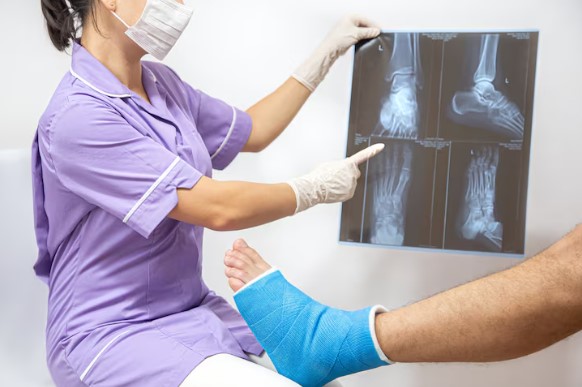
Bone grafting is a medical procedure that may be intimidating to the average patient, but to those of us in the medical community, it is a procedure of healing and restoration. It is the bridge between a debilitating injury and a return to full function. To us at Emsurg, a leading manufacturer of medical equipment and instruments, it is the interaction between the potential of the body and the precision of the engineer.
Whether it is in the development of the surgical tools which prepare the bone bed for the bone graft or in the development of the orthobiologics which perform the grafted tissue itself, in either case what we do is bring together the worlds of what is possible and what is precise.
To understand the need for bone grafts, it is first necessary to understand the potential of the body to heal itself and the ways in which it may need a little help along the way.
How Bone Grafts Support Natural Regeneration?
Bone is the only element of the body which regrows as opposed to repairs. Also, the body may put in scar tissue for skin damage, but in the case of bone it will grow back to its original condition. However, it has limitations in this process. The body cannot regenerate a bone over a wide gap for which bone graft is necessary to prevent significant defects or structural loss.
Biological Principles That Make Bone Grafts Effective
For the body to regenerate a bone, three principles of biology must be satisfied: osteoconduction, osteoinduction, and osteogenesis.
Osteoconduction: It is the trellis work required for the new bone cells to cross over onto the graft material. This is the primary role of synthetic bone graft materials.
Osteoinduction: The process which prompts the body’s own cells to become bone forming cells.
Osteogenesis: The process of building new bone by the surviving cells in the graft.
Successful bone grafts always relies on careful balance of these three principles working together at the defect site.
When Are Bone Grafts Required?
Surgeons often resort to grafting as the natural healing process may be hindered or even be physically impossible without it.
Trauma and Non-Unions
Bone grafts provide the structural scaffold and biological stimulus to the affected areas. When the trauma is too great, the bone may shatter into many pieces, making it virtually impossible for the body’s natural osteoblasts to bridge the gap. In addition, if the bone fails to heal, bone graft is essential. The space between the broken bone parts may be too wide for the natural process to bridge without assistance.
Spinal Fusion Surgery
This is perhaps one of the most common grafting operations. Severe back pain may be caused by unstable vertebrae, and the solution is to fuse the vertebrae together, thus ending the movement of the spine. The bone graft material is placed between the vertebrae, encouraging the vertebrae to fuse into one bone.
Infection Management
When the bone itself becomes infected, it becomes very difficult for the body to fight off the infection. The traditional method of dealing with Osteomyelitis, or bone infection, is debridement, or the removal of all the infected bone tissue. The problem with this process, however, is the “dead space” it creates, as the removal of all the bone tissue creates a void that, if left unfilled, may cause the infection to return.
The Evolution of Bone Graft Materials
Traditionally, the “gold standard” bone graft material has been the autograft, where bone tissue is taken from the patient’s hip, or iliac crest. Although very effective, it, too, has its drawbacks, including the cost of the second surgery, the pain, and the recovery time.
This led to the advent of allografts (donor bone) and more importantly to us as manufacturers, the advancement of synthetics.
Our Approach with Bonesurg
Emsurg has directed our research efforts to specifically target these issues. We realized that the surgeon needed a reliable and consistent material that was also bioactive to replace or supplement the aforementioned grafts. We developed our line of orthobiologics under the brand name Bonesurg.
Optimizing Integration with BoneSurg HA
One of our most important developments has been our synthetic bone graft substitute, BoneSurg HA. As its name suggests, it is made up of the compound hydroxyapatite. We chose this compound because it is the main mineral constituent of bone tissue and therefore has the highest level of biocompatibility.
We made it nanocrystalline. By working on the nanometer scale, we are able to greatly increase the surface area of the material. The more surface area that is present, the more space is made available for protein and cell adhesion. This directly enhances the process of osteoconduction, where the patient’s bone can integrate with the graft more rapidly.
Combating Dead Space with BoneSurg CR
In addressing the concern regarding infection and voids as previously discussed, we came up with BoneSurg CR. This material is designed to address concerns regarding dead space and infection management. It is a great tool for addressing a need, which in turn gives structure to the site and to which a full recovery is very likely. Also, it is to prevent the formation of a hematoma or fibrous tissue that may serve as a base for infection by bacteria.
The Future of Bone Grafts in Modern Surgery
While our material is, of course, the star of this biological show, a successful surgery depends on a number of other factors, not least of all our experience as a manufacturer of surgical equipment.
A bone graft will not integrate into a site if the bone bed has not been adequately prepared. The reamers, drills, and saws required for this must be precision-manufactured to prevent thermal necrosis, or “burning” the bone with friction, which would kill off all the cells that are meant to be part of a successful recovery. Even the instruments for mixing and applying bone cement or bone graft material must be designed for comfort and precision to ensure that the material is precisely placed where it is needed, with no voids or air pockets.
By providing control over both our instruments and our implantable materials we hope to provide a surgeon with a whole package for a successful procedure. It is not just about filling a hole in a bone. It is about engineering a recovery.